Catalogue No. I — 2025
Specimens of light, excavated for the modern study.
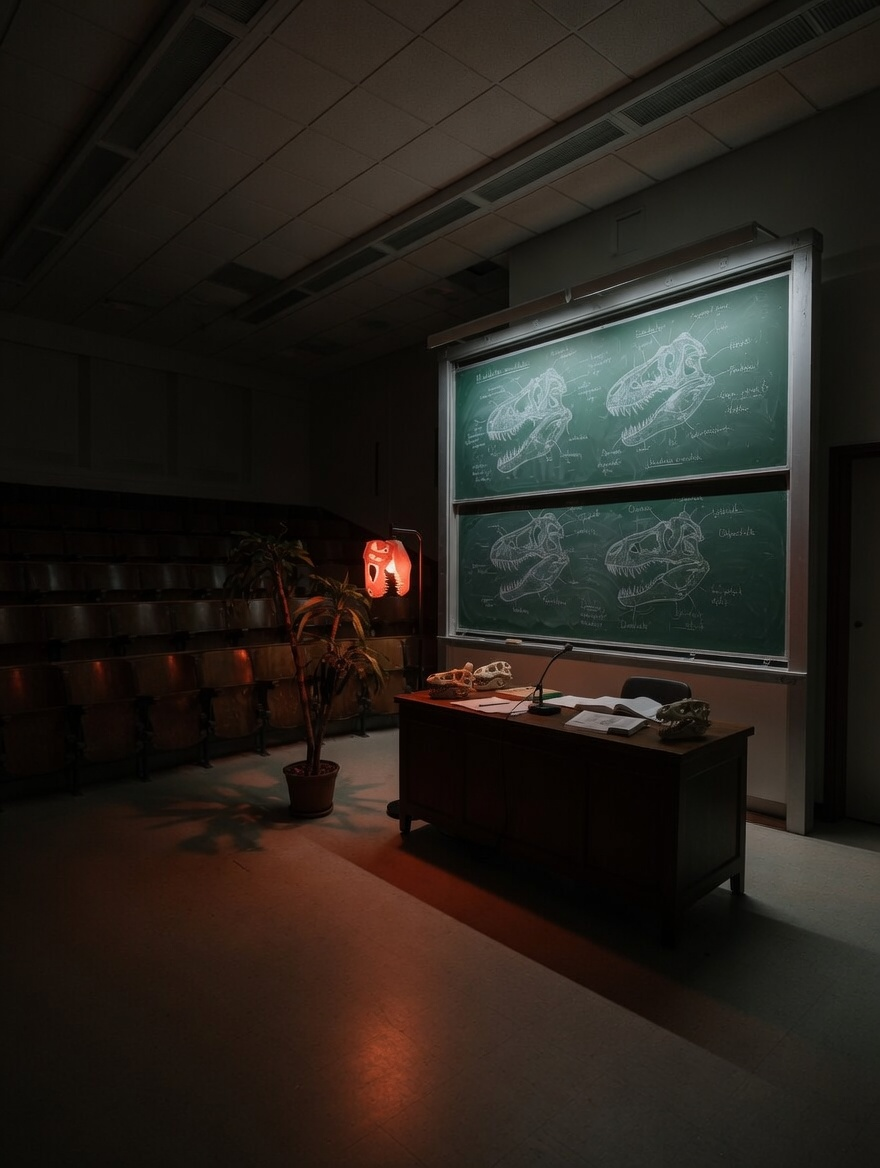
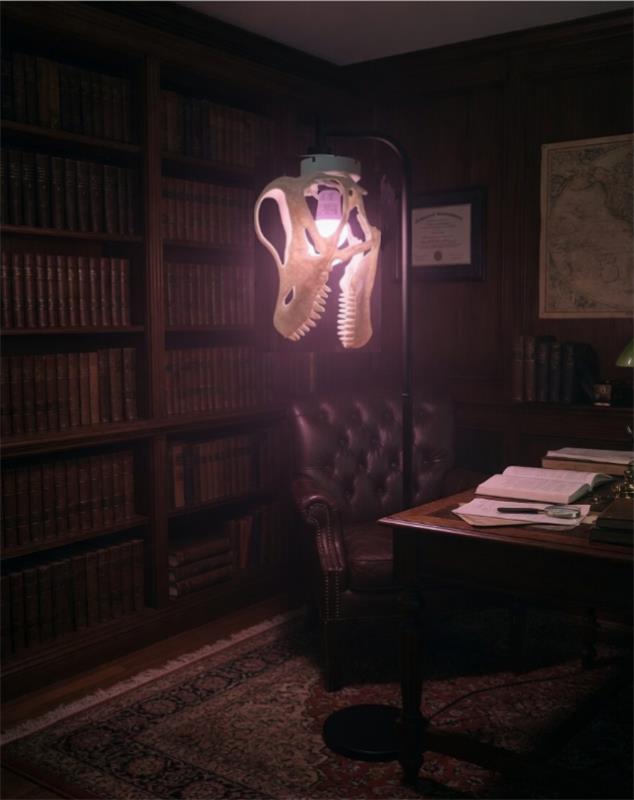
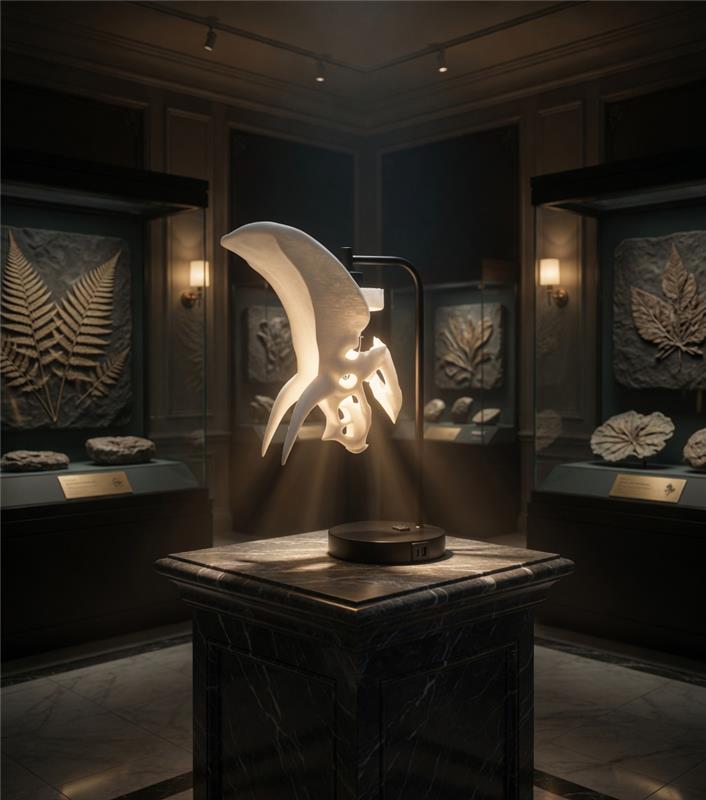
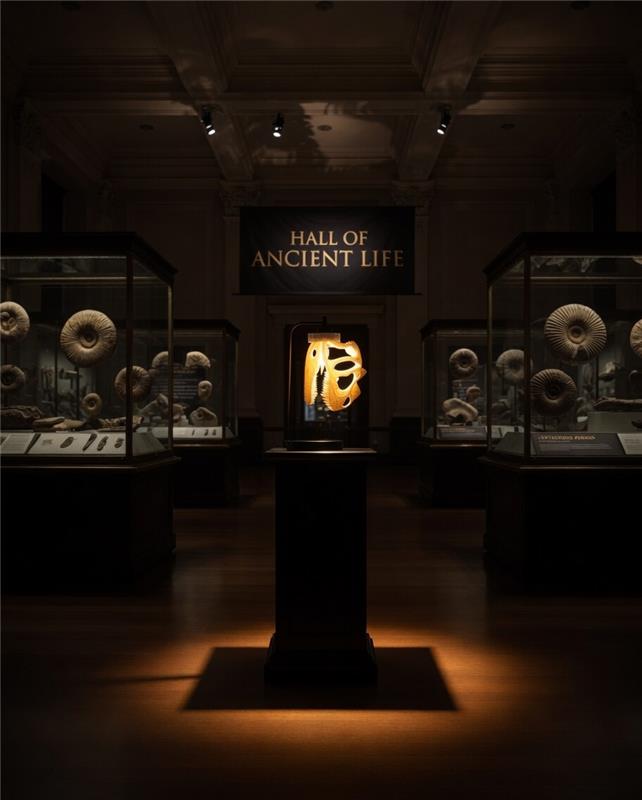
Meticulously 3D-printed from osteological scans of museum-accessioned holotypes, each specimen is hand-finished, illuminated from within, and catalogued with a signed field card.
Each specimen is made to order, formally accessioned, and accompanied by a signed field card.
I.
Anatomically faithful
Each specimen is referenced from documented museum mounts and articulated bone-by-bone.
II.
Digitally articulated, lithically printed
Each element is reconstructed in silico from osteological reference, then fused-deposition printed and hand-patinated to a fossil finish.
III.
Cranial illumination
An Edison filament or chromatic LED is seated within the cranial vault, casting light through the orbits and fenestrae of the skull.
The Collection
Specimens currently on display.
The Process
From the field to your study.
Every Paleolights specimen begins with a high-resolution 3D scan of a museum-accessioned cranium, faithfully reproduced element by element on our printers and articulated by hand in the atelier — a process closer to fossil preparation than to manufacture.
- 01
Field survey
A museum-accessioned holotype cranium is documented in situ via high-resolution photogrammetry, capturing every suture, foramen, and diagenetic scar.
- 02
Osteological reconstruction
The point cloud is retopologised and the cranium re-articulated element by element, cross-referenced against published skeletal monographs.
- 03
Lithification
Each bone is deposited in successive micron-thin strata on the printer bed — a synthetic analogue to the slow accretion of sedimentary fossilisation.
- 04
Preparation
Matrix and support structures are excavated under magnification, sutures are dressed, and the surface is washed in iron-oxide patinas to evoke a permineralised finish.
- 05
Articulation & accession
The cranium is mounted, wired for illumination, and formally accessioned — signed, numbered, and accompanied by a hand-printed field card in the manner of a 19th-century specimen label.
Correspondence
Commissions & private viewings.
We accept a small number of bespoke specimens each season — sauropods, ceratopsians, and the occasional pterosaur. Write to us with the species you have in mind.